
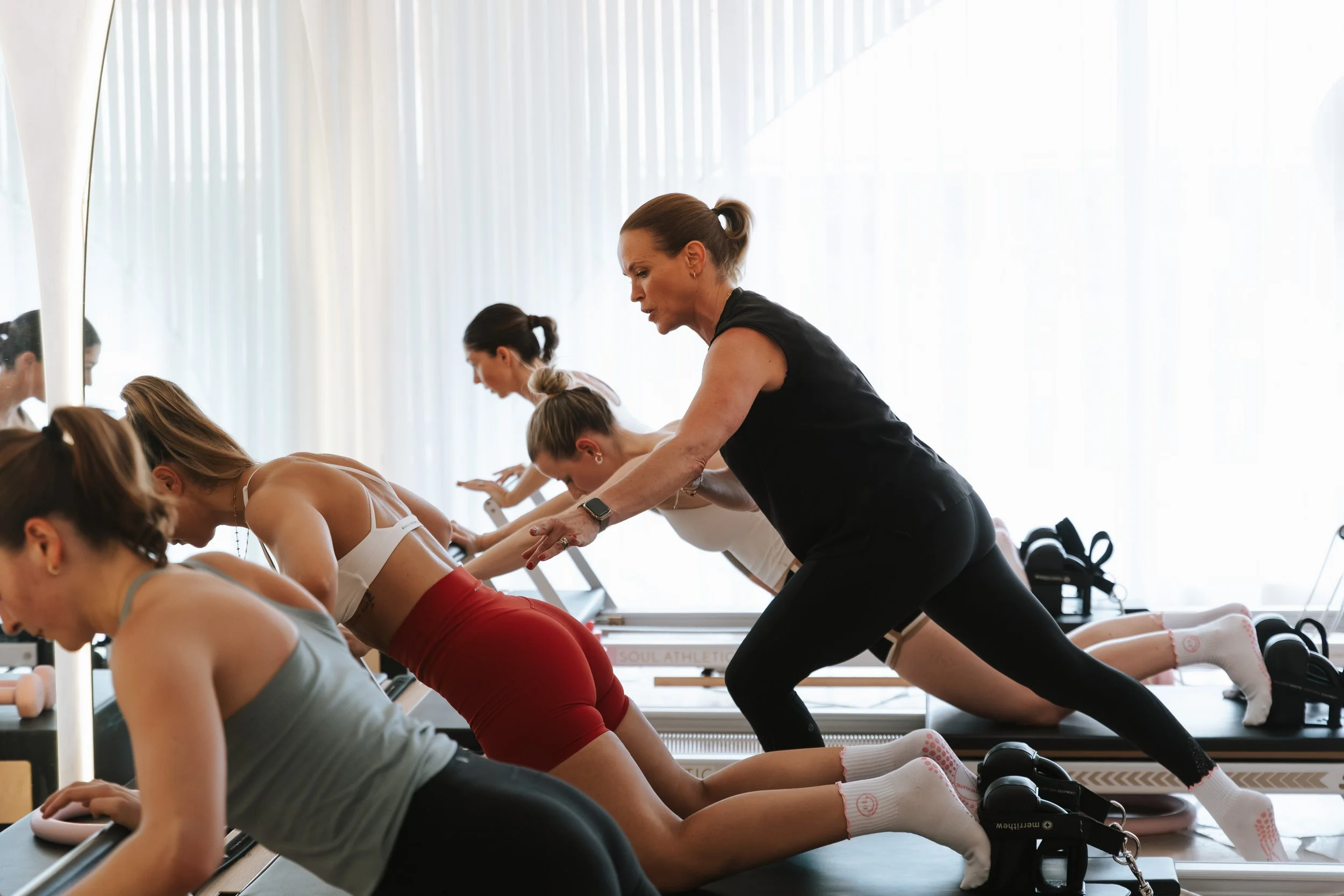
Prenatal Reformer Pilates in Melbourne
Reformer Pilates is one of the most popular ways to keep training through pregnancy, and one of the reasons is simple: the machine does some of the work for you. The springs support your body, the movements are controlled, and nothing about it is high-impact.
Soul Athletic welcomes prenatal members at all seven of our studios - six across Bayside Melbourne and one on the southern Gold Coast. We have been doing this for ten years, and our instructors have taken members through every stage of pregnancy and back again afterwards.
This page covers what to expect, what changes when you are pregnant, which classes to book, and when to talk to your doctor first.
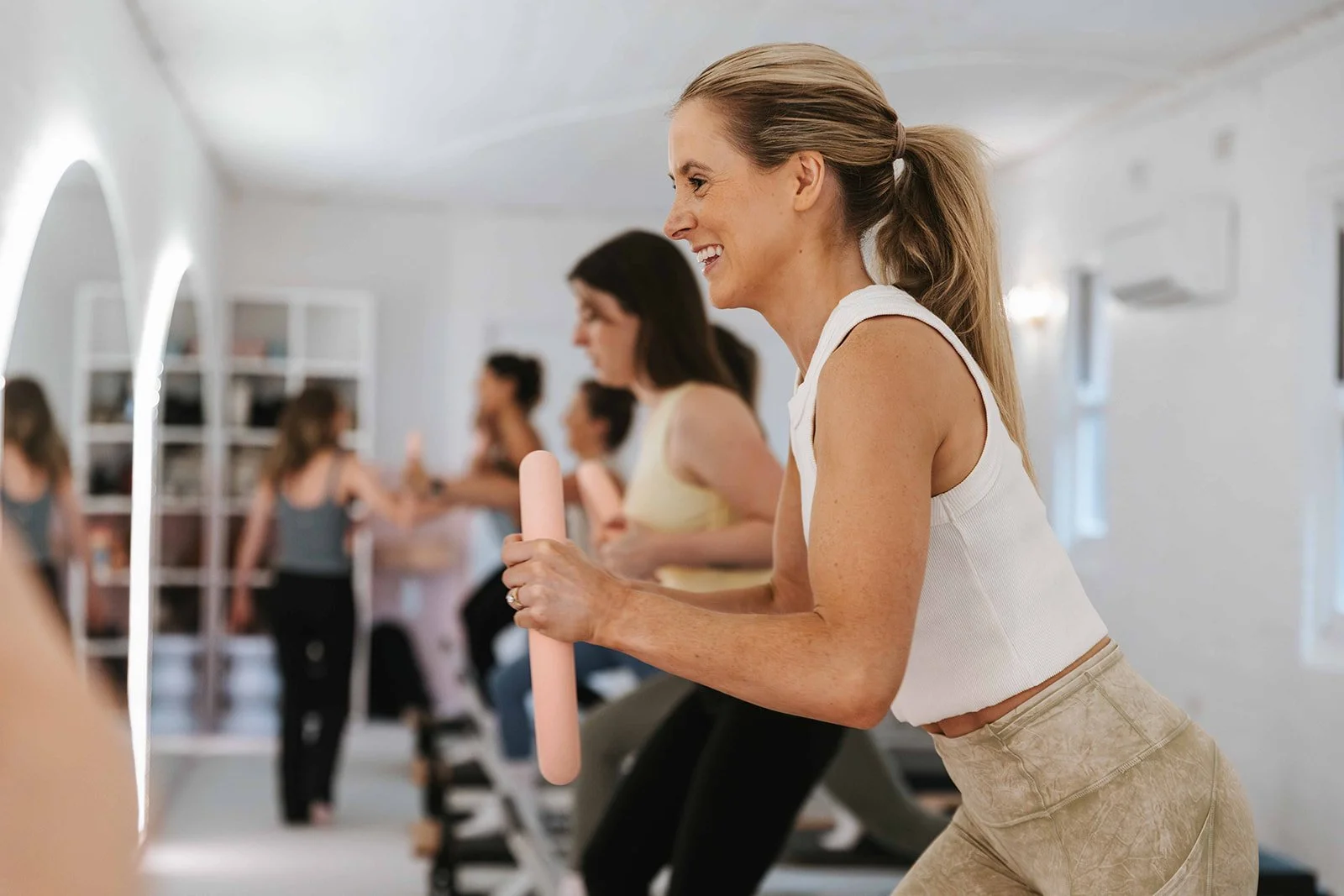
Reformer Pilates - Soul Athletic - Elwood
Is Reformer Pilates safe during pregnancy?
For most women with a low-risk pregnancy who have been cleared to exercise, yes - and the current Australian guidance actively encourages staying active.
RANZCOG recommends accumulating 150 to 300 minutes of moderate intensity physical activity each week during pregnancy, ideally at least 30 minutes on most days. Moderate intensity is described as feeling like you are working "somewhat hard" - your breathing and heart rate lift, but you could still hold a conversation.
Reformer Pilates fits that description well.
A 45-minute class sits comfortably in the moderate range, it is low-impact, and the reformer itself gives you stability that floor work does not.
What matters more than the format is the instruction.
Pregnancy changes which movements are appropriate, and that changes as you progress
- which is why small classes and an instructor who knows you are pregnant matter more than the equipment does.
What changes when you are pregnant?
Three things, and the first surprises most people.
You are our guide.
We will speak to you throughout your pregnancy to understand what you are comfortable with and what you would prefer to stop
Every expecting mum is different, and we are happy to be guided by how you are feeling.
This includes laying on your back, for some clients you are not comfortable on your back at any stage of your pregnancy. For others, you maybe comfortable for small amounts of time. We will adjust the class to suit you.
For supine work, our instructors can support by re-positioning: side-lying, seated, kneeling, standing, or propped on an incline.
Our instructors will give you the alternative as the class goes.
Load comes down, control goes up
Heavy lifting and jumping or bouncing movements are not recommended during pregnancy.
In practice that means no jumpboard, which is why our Reformer Active classes are not suitable for prenatal.
Moving to more attention to how a movement feels and ensuring support through good technique and adjustment when and where needed.
Your core work changes shape
Traditional abdominal flexion - crunches, roll-ups, anything that domes the belly - gets replaced with deeper, gentler work and a focus on breathing and pelvic floor connection. This is also the work that makes returning afterwards easier, which is why it is worth doing properly rather than skipping.
Which classes to book while pregnant?
Reformer Flow is our foundational class - controlled, well-paced, and the easiest class for an instructor to modify to suit you.
It is also where you will feel most comfortable if you are new to the reformer.
Reformer Strength is also suitable for prenatal, if this style is preferred by prenatal client.
We ask prenatal members to stay in Flow or Strength rather than Reformer Active. Reformer Active classes move faster and carry more load, which leaves less room for the kind of individual attention that matters when you are pregnant.
At our Tugun studio on the Gold Coast, prenatal members are welcome in both Reformer Flow and Reformer Strength also.
Please always remember tell your instructor before class starts - every time, not just the first time.
They will adjust as your pregnancy progresses, and what suited you at 14 weeks will not be what suits you at 32.
Trimester by trimester
First trimester
If you were already doing reformer Pilates, you can generally continue much as you were, once you have been cleared. Many women feel exhausted or nauseous in these weeks, and that is a reason to scale back rather than push through.
If you are starting from scratch, this is a fine time to begin.
Second trimester
Usually the most comfortable stretch, and the point where the supine modifications begin if they are not comfortable for you. Your centre of gravity is shifting, so balance work changes, and you may find you want more support in standing positions. Most members say this is when they feel strongest.
Third trimester
Range of movement reduces, positioning becomes the main event, and sessions get shorter or less frequent for some people. Others keep coming right up to the end - we have had members training with us to 39 weeks. Both are fine. The goal shifts from building to maintaining, and from maintaining to simply moving well.
When to stop and seek advice
Stop exercising and contact your doctor or midwife straight away if you experience any of the following during or after a class:
• chest pain or dizziness
• vaginal bleeding or loss of amniotic fluid
• decreased fetal movement
• uterine contractions, or pain in the lower back, pelvic area or abdomen
This list comes from RANZCOG. Our instructors will always tell you to stop if something does not feel right - nobody at Soul Athletic will ever encourage you to push through pain during pregnancy.
Coming back after birth
Most women are cleared to return to structured exercise around six to eight weeks postpartum, but that is a conversation with your GP or obstetrician rather than a fixed rule - it depends on your birth, your recovery and how you are feeling.
Once you have been cleared, you are welcome in any of our classes - Reformer Flow, Reformer Active or Reformer Strength. There is no separate postnatal track you have to work through first.
Plenty of members choose to start back with Reformer Flow anyway, simply because it is the most controlled class and a gentler way back in. That is a preference, not a rule.
Tell your instructor how far postpartum you are and how your birth went. It changes what they will have you doing. You do not need to have that conversation in front of the class - arrive a few minutes early and mention it quietly.
Members have come back to us at six weeks and members have come back at eight months. There is no schedule you are supposed to be on.
Where to do Prenatal Reformer Pilates in Bayside Melbourne
All six Melbourne studios welcome prenatal members, and one membership covers all seven including Tugun - so you can switch studios as your energy and schedule change.
Class sizes are small everywhere, which is what makes individual modification possible:
• Reformer Pilates Black Rock - 9 reformers, our smallest class
• Reformer Pilates Parkdale - 10 reformers, plus an infrared sauna
• Reformer Pilates Elwood - 10 reformers
• Reformer Pilates Middle Park - 10 reformers
• Reformer Pilates Beaumaris - 12 reformers
• Reformer Pilates Sandringham - 12 reformers, plus an infrared sauna
• Reformer Pilates Tugun - 15 reformers, southern Gold Coast
Serving Bayside and inner-south Melbourne: Parkdale, Mordialloc, Mentone, Cheltenham, Highett, Beaumaris, Black Rock, Hampton, Sandringham, Brighton, Elwood, St Kilda, Middle Park, Albert Park, South Melbourne and Port Melbourne.
Getting started
Get cleared by your doctor or midwife first. Then book into a Reformer Flow class and tell your instructor you are pregnant and how far along you are.
New clients can try 3 classes for $60, valid for 14 days across any Melbourne studio.
If you would rather ask a question before booking, email studio@soulathletic.com.au or call 0433 555 218 and we will talk you through it.
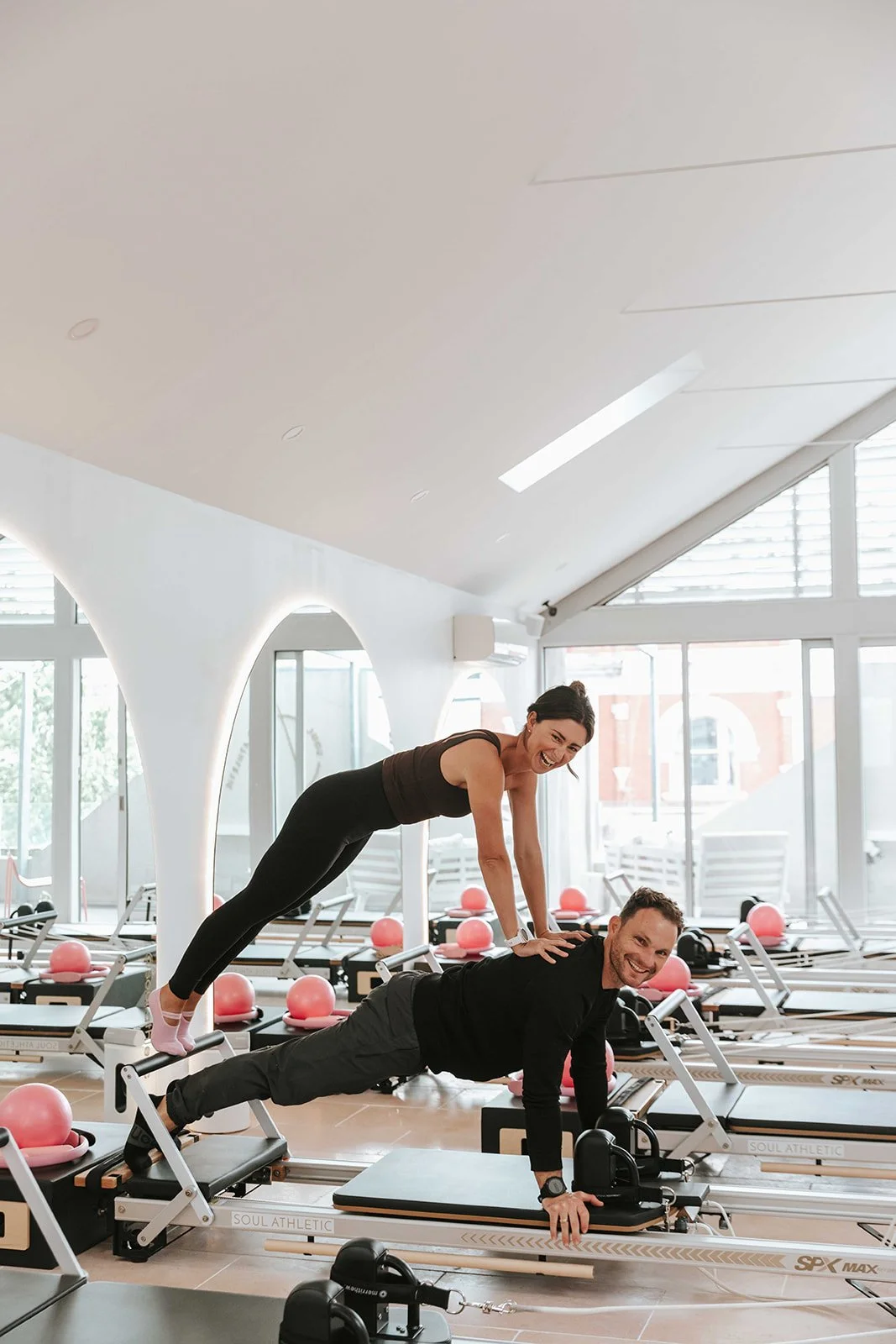
FAMILY OWNED AND
OPERATED
Together with their team look forward to welcoming you into our studios soon. Reach out via the below link for more information on how to get started or any questions Frequently Asked Questions
-
For most women with a low-risk pregnancy who have been cleared to exercise by their doctor or midwife, yes. Australian guidance recommends 150 to 300 minutes of moderate intensity activity each week during pregnancy, and a 45-minute reformer Pilates class sits comfortably in that range. Always get clearance from your own healthcare professional first.
-
AReformer Flow or Reformer Strength, at any of our seven studios. Flow is our foundational class - controlled, well-paced and the easiest for an instructor to modify around you, and the better choice if you are new to the reformer. Strength suits you if that is the style you already prefer. We do ask prenatal members to stay out of Reformer Active, which uses the jumpboard and moves at a pace that leaves less room for individual adjustment. Tell your instructor before every class, not just your first.
-
Yes. Plenty of our prenatal members have never used a reformer before. Start with Reformer Flow, let your instructor know it is your first class and that you are pregnant, and they will take you through every movement.
-
You guide this one. Some members are comfortable on their back for short periods well into pregnancy, others are not comfortable at any stage, and it often changes as the weeks go on. Your instructor will ask and will adjust the class to suit you - side-lying, seated, kneeling, standing or propped on an incline - so you still get the benefit of the exercise. Time spent flat on your back is generally worth limiting as pregnancy progresses, so tell your instructor how you are feeling before each class and speak to your doctor or midwife if you are unsure.
-
As long as you are comfortable and your healthcare professional is happy for you to continue. Some members stop in the second trimester, others train with us to 39 weeks. There is no single right answer, and the goal in the third trimester shifts from building strength to moving well.
-
Stop and contact your doctor or midwife immediately if you experience chest pain, dizziness, vaginal bleeding, loss of amniotic fluid, decreased fetal movement, or uterine contractions or pain in the lower back, pelvic area or abdomen.
-
Most women are cleared to return to structured exercise around six to eight weeks postpartum, but this depends on your birth and recovery and is a conversation with your GP or obstetrician. Once you have been cleared you are welcome in any of our classes - Reformer Flow, Reformer Active or Reformer Strength. Many members choose to start back with Flow as a gentler way in, but that is a preference rather than a requirement. Let your instructor know how far postpartum you are before class.